
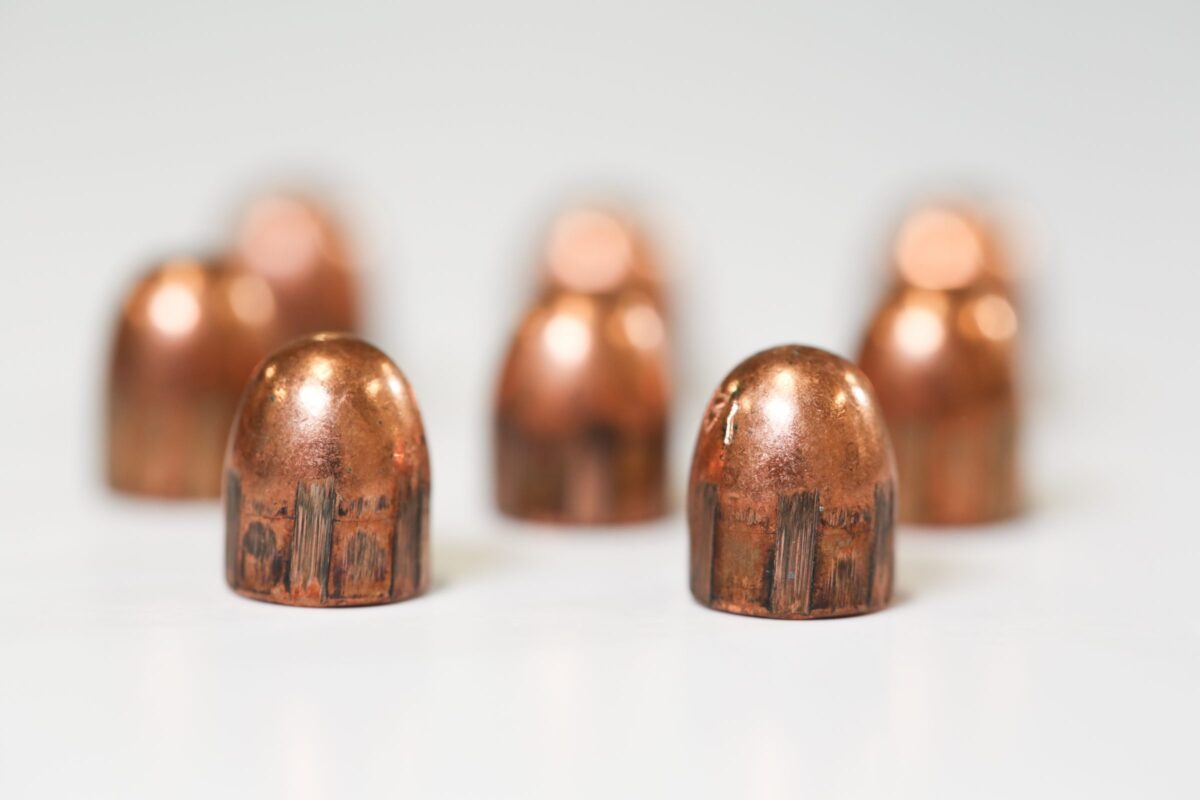
This CSAFE webinar was held on February 10, 2021.
Presenters:
Heike Hofmann
Professor and Kingland Faculty Fellow, Iowa State University
Susan VanderPlas
Research Assistant Professor, University of Nebraska, Lincoln
Alicia Carriquiry
Distinguished Professor and President’s Chair in Statistics, CSAFE Director
Presentation Description:
In the past decade, and in response to the recommendations set forth by the National Research Council Committee on Identifying the Needs of the Forensic Sciences Community [2009], scientists have conducted several black-box studies that attempt to estimate the error rates of firearm examiners. Most of these studies have resulted in vanishingly small error rates, and at least one of them [Baldwin et al., 2014] was cited by the President’s Council of Advisors in Science and Technology (PCAST) during the Obama administration, as an example of a well-designed experiment. What has received little attention, however, is the actual calculation of error rates, and in particular, the effect of inconclusive findings on those error estimates. The treatment of inconclusive results in the assessment of errors has far-reaching implications in the legal system. We will revisit several black-box studies in the area of firearms examination, investigating their treatment of inconclusive results. It is clear that there are stark differences in the rate of inconclusive results in regions with different norms for training and reporting conclusions. More surprisingly, the rate of inconclusive decisions for materials from different sources is notably higher than the rate of inconclusive decisions for same-source materials in some regions. To mitigate the effects of this difference we propose a unifying approach to the calculation of error rates that is directly applicable in forensic laboratories and legal settings.
Associated Reading:
Webinar Q&A: Treatment of Inconclusive Results in Error Rates of Firearms Studies
Insights: Treatment of Inconclusives in the AFTE Range of Conclusions
Related Resources


Forensic Footwear: A Retrospective of the Development of the MANTIS Shoe Scanning System
July 10, 2025
There currently are no shoe-scanning devices developed in the United States that can operate in a real-world, variable-weather environment in …

Examiner consistency in perceptions of fingerprint minutia rarity
July 10, 2025
Friction ridge examiners (FREs) identify distinctive features (minutiae) in fingerprints and consider how rare these observed minutiae are in their …